
You reduce lead time by eliminating waiting, improving flow, fixing bottlenecks, standardizing work, and using data to make smarter decisions. That is the simple truth. Lead time does not shrink because of luck or a new machine. It shrinks when leaders remove the friction that slows the entire value stream. Today’s most competitive plants are obsessed with understanding how to improve lead time because customers demand speed, supply chains are unstable, and margins depend on flow.
The companies winning right now treat lead time as the ultimate performance metric. When lead time goes down, everything else follows. Inventory drops. Cash moves faster. Quality problems surface earlier. Planning becomes easier. Customer trust grows stronger. Reducing lead time is not a technical exercise. It is a strategic advantage.
Why Lead Time Matters More Today
Modern manufacturing faces real volatility. Orders swing quickly. Supply chains break without warning. Skilled labor is harder to find. Technology evolves faster than training cycles. In this climate, long lead times are a threat. They delay revenue. They amplify risk. They hide quality issues.
The manufacturers building momentum today understand that shorter lead times equal stronger resilience. You cannot control global events, but you can control the speed and clarity of your internal operations.
Understanding the Real Drivers of Lead Time
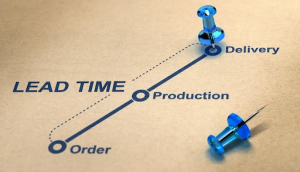
Lead time is not about one process. It is the total time from customer request to customer delivery. Inside that window are hundreds of moments where flow slows down. Excess inventory is sitting idle. Overproduction creates queues. Long setups. Machine breakdowns. Quality defects that create rework loops. Material shortages that freeze entire lines.
To reduce lead time, you must see the entire value stream as one connected system. That is where Lean thinking becomes unstoppable.
1. Strengthen Flow Across the Value Stream
Flow is the foundation. When materials, decisions, and work move smoothly, lead time naturally falls and cycle time improves. Most plants have fractured flow caused by silos, unpredictable schedules, and old layouts.
Improving flow means creating stability, balancing workloads, removing unnecessary steps, and aligning processes to the rhythm of customer demand. A value stream with clear flow reveals every delay, every hidden queue, and every inefficiency that was previously invisible.
Flow is not just a Lean concept. It is a survival strategy.
2. Reduce Setup and Changeover Time
Setup time is one of the biggest killers of lead time. Long changeovers force companies to run large batches, which inflate inventory, extend lead time, and hide quality problems.
- True improvement comes from SMED principles.
- Prepare tools before the machine stops.
- Convert internal steps to external steps.
- Simplify adjustments.
- Standardize the sequence.
Plants that take SMED seriously often cut changeover time in half. This unlocks smaller batches, faster response to demand, and shorter production cycles without adding equipment.
3. Build a Pull System Instead of a Push System
Pull systems reduce lead time by aligning production with actual customer demand rather than forecasts or arbitrary schedules. Instead of pushing products into the next step before it is ready, each process only makes what is needed, when it is needed.
Effective pull stabilizes flow, reduces overproduction, clears floor space, and prevents bottlenecks from forming. In a pull environment, lead time becomes predictable because the system is not overwhelmed with excess inventory.
Kanban, heijunka, and consumption-based replenishment all strengthen this pillar. Modern plants use digital kanban, RFID tracking, and real-time usage signals to make pull even more precise.
4. Improve Material Availability and Inventory Accuracy
Nothing destroys lead time faster than stockouts or incorrect inventory records. When a workstation does not have the material it needs, everything stops. The schedule collapses. Expediting begins. Costs explode.
- To reduce lead time, material availability must be frictionless.
- Accurate inventory counts.
- Reliable supplier performance.
- Proper reorder points.
- Clear material flow paths.
- Dedicated supermarkets near the point of use.
Digital inventory visibility helps dramatically. Barcode scanning, IoT tracking, and automated reorder triggers prevent slowdowns before they start.
5. Eliminate Bottlenecks to Stabilize Throughput
Bottlenecks are the heartbeat of lead time. If the slowest process is unstable, the lead time becomes unpredictable. If the bottleneck is buried under distractions, rework, or long setups, the entire system suffers.
Improvement begins by identifying the true constraint with value stream mapping and direct observation. Once the bottleneck is clear, teams must protect it. Remove interruptions. Reduce changeovers. Assign the best operators. Improve preventive maintenance. Improve training.
A stable bottleneck shortens lead times almost instantly.
6. Build Quality at the Source to Stop Defect Loops
Rework is silent lead time damage. Every defect restarts the clock. Every inspection delay adds hours or days. Every quality escape forces teams into reactive mode.
- The Lean approach is the only sustainable solution.
- Design processes that prevent errors.
- Make abnormalities visible immediately.
- Stop the line when defects appear.
- Fix root causes rather than hiding symptoms.
Poka Yoke, Andon systems, standardized work, and true root cause analysis remove the friction that quietly inflates lead time.
With Industry 4.0, predictive quality becomes even more powerful. Sensors detect drift. Vision systems catch microdefects. AI models predict patterns before they appear on the floor.
Quality at the source is a direct lead time reducer.
7. Level Production to Reduce Variability
Variability is one of the biggest causes of long lead times. When orders spike, production panics. When demand drops, resources sit idle. The roller coaster creates chaos, and chaos extends the lead time.
Heijunka leveling smooths production by distributing work evenly across time. Instead of reacting emotionally to order fluctuations, teams follow a planned, balanced schedule.
Leveling creates predictability, and predictability shortens lead time.
8. Improve Preventive Maintenance with Real Predictive Tools
Unplanned downtime destroys lead time. A single breakdown can disrupt an entire week. To reduce lead time, equipment must be reliable, predictable, and supported by disciplined preventive maintenance.
- Today’s smart factories integrate predictive maintenance.
- Sensors measure vibration, temperature, and load.
- Algorithms predict failure patterns.
- Maintenance teams fix issues before breakdowns occur.
Machines that stay healthy keep lead time short.
9. Increase Workforce Capability and Cross Training
A flexible workforce reduces delays. When only one person can run a machine or perform a critical task, lead time becomes fragile. Cross-training builds resilience. It ensures that work continues even when individuals are unavailable.
Skilled teams move faster. They identify issues early. They solve problems without searching for supervisors. They maintain flow with confidence.
Reducing lead time requires minds that understand the value stream, not just hands that perform tasks.
10. Embrace Real Continuous Improvement
Lead time shrinks when problems are solved daily, not once a quarter. Continuous improvement is the cultural engine that keeps flow alive, quality stable, and decisions sharp.
- Operators improve their own work.
- Supervisors coach instead of firefighting.
- Engineers support problem-solving instead of designing band-aids.
The companies with the shortest lead times are the ones where improvement happens every shift.
The Future of Lead Time Reduction
Modern manufacturing relies heavily on real-time data, digital twins, advanced analytics, and autonomous systems. But none of these work in chaotic environments. Lead time drops fastest in factories that blend Lean fundamentals with digital intelligence.
- Flow plus data.
- Pull plus automation.
- Quality at the source plus AI detection.
- Continuous improvement plus cloud visibility.
The companies that master this blend will set the speed standard for their entire industry.
A Final Thought for Leaders
If you want to reduce lead time, you must design a system that refuses to waste time. Every delay, every queue, every unexplained slowdown is an opportunity for advantage. Lead time reduction is not a project. It is a mindset. It is the decision to stop tolerating friction in your value stream.
The plants that commit to these ten actions will run faster, smoother, and more profitably than their competitors. Lead time is the scoreboard. Improvement is the game.
Ready to Transform Your Lead Time?
Explore more practical Lean methods, guides, and real operational tools at LeanManufacture.net and start shaping a manufacturing system built for speed and long-term resilience.
